
Your Garage Door Shouldn't Sound Like That
You press the button, and instead of a smooth, quiet operation, your garage door sounds like it's auditioning for a horror movie. Grinding, squealing, popping, rattling — none of these sounds are normal, and each one points to a specific problem that could get worse if you ignore it.
Homeowners across Schenectady deal with noisy garage doors every day, especially in older homes where the door system has been running for years without maintenance. The good news is that most garage door noises are diagnosable, and many of the underlying problems are fixable before they turn into expensive repairs or a complete breakdown.
Here's a guide to the most common garage door sounds, what's causing them, and what you should do about each one.
Grinding or Scraping Sounds
A grinding noise when your garage door opens or closes is one of the most common complaints we hear. It usually means metal is rubbing against metal somewhere in the system, and it's almost never something that resolves on its own.
Common Causes
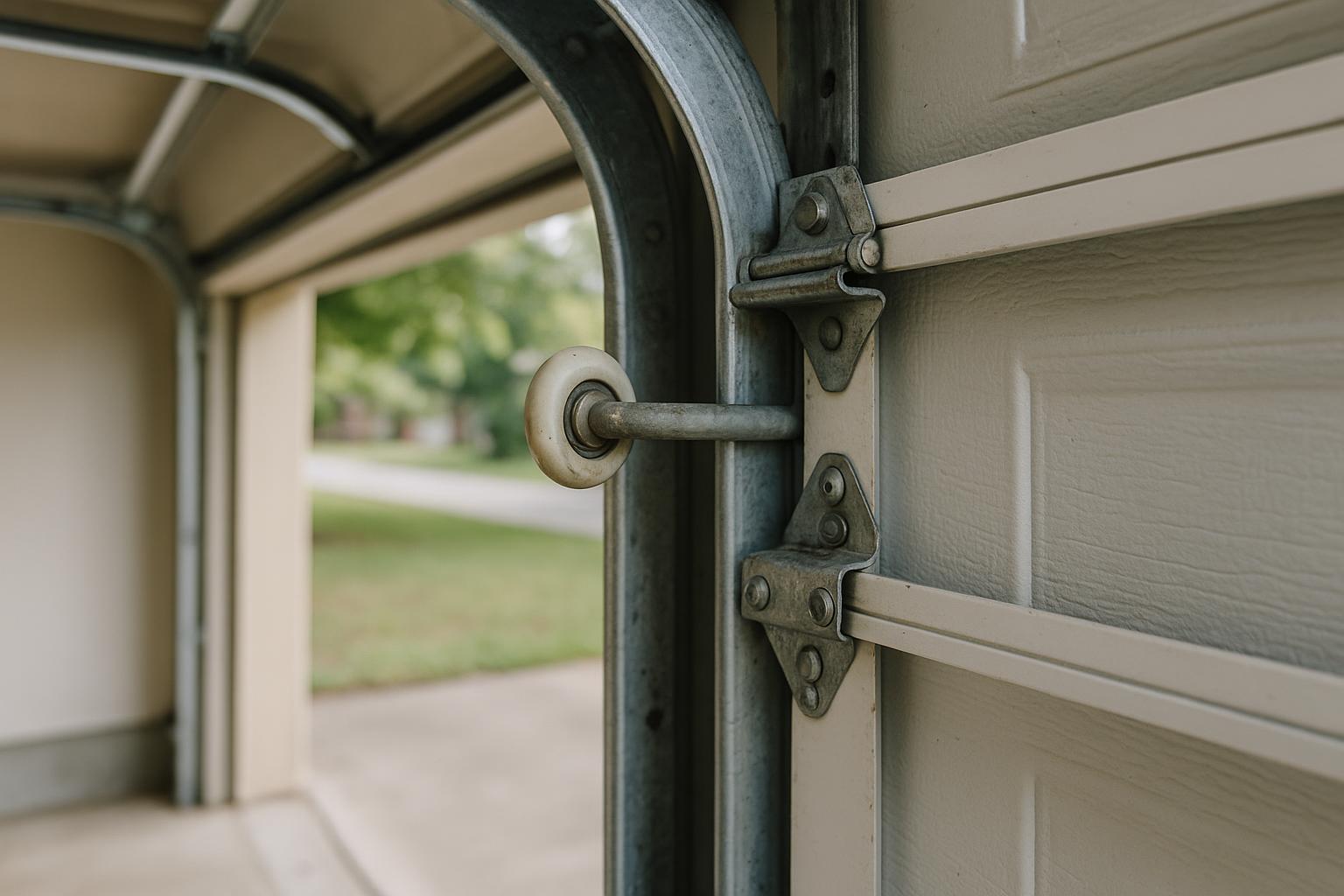
- Worn rollers: Steel rollers wear down over time and can start grinding against the track. Nylon rollers are quieter and last longer, making them a popular upgrade for homeowners in Schenectady and the surrounding Capital District.
- Misaligned tracks: If the vertical or horizontal tracks have shifted even slightly, the door can scrape against them as it moves. This puts stress on the entire system and can lead to the door getting stuck.
- Lack of lubrication: Dry hinges, rollers, and bearings create friction that produces that unmistakable metal-on-metal grinding sound.
What to Do
Start by visually inspecting the rollers and tracks. If the rollers look worn, chipped, or cracked, they need to be replaced. If the tracks look bent or out of alignment, don't try to force them back into position yourself — improper track adjustment can cause the door to fall. Call a professional to assess and correct the alignment safely.
Squealing or Squeaking Sounds
A high-pitched squeal every time your door moves is hard to ignore — and your neighbors probably aren't thrilled about it either.
Common Causes
- Dry or rusted hinges and springs: Without regular lubrication, the moving parts of your garage door system dry out and create friction that produces squealing.
- Worn torsion spring bearings: The bearing plates at the ends of your torsion spring shaft can wear out and start squealing as the shaft rotates.
- Old rollers: Steel rollers that have lost their lubrication or developed flat spots will squeal as they travel through the tracks.
What to Do
Apply a garage door-specific lubricant (not WD-40, which is a solvent, not a lubricant) to the hinges, rollers, springs, and bearing plates. Use a silicone-based or lithium-based spray. If the squealing persists after lubrication, the parts may be too worn and need replacement.
Rattling or Vibrating Sounds
If your garage door sounds like a box of loose bolts every time it operates, something is literally loose.
Common Causes
- Loose hardware: The nuts, bolts, and screws that hold your tracks, hinges, and brackets in place can loosen over time due to the constant vibration of daily use.
- Loose chain on the opener: If you have a chain-drive garage door opener, the chain can develop slack and rattle against the rail as it operates.
- Worn support brackets: The brackets that secure the tracks to the wall and ceiling can loosen or wear out, allowing the tracks to vibrate during operation.
What to Do
Grab a socket wrench and tighten all the visible nuts and bolts on the tracks, hinges, and brackets. Be careful not to overtighten, as this can strip the threads or warp the tracks. If you have a chain-drive opener, check the chain tension — it should have about half an inch of slack at the midpoint. If tightening everything doesn't solve the problem, the issue may be deeper in the system and worth having a technician inspect.
Banging or Popping Sounds
A sudden bang or pop from your garage door is startling and usually signals a more serious issue.
Common Causes
- Torsion spring issues: As torsion springs age and lose tension, they can shift on the shaft and produce a loud popping or banging sound. In the worst case, a loud bang could mean a spring has snapped — a situation that requires immediate professional attention.
- Panel problems: Warped or damaged panels can pop or bang as they flex during operation, especially in the temperature swings common in Schenectady's climate.
- Opener issues: A failing garage door opener motor or stripped gear can produce banging sounds as it struggles to lift the door.
What to Do
If you hear a single loud bang and your door stops working, there's a strong chance a spring has broken. Do not attempt to operate the door manually or repair the spring yourself. Torsion springs are under extreme tension and can cause serious injury. Call a garage door professional immediately.
Humming or Buzzing Without Movement
You press the button, the opener hums or buzzes, but the door doesn't move. This is frustrating, but it's a distinct symptom that narrows down the problem.
Common Causes
- Stripped opener gear: The drive gear inside the opener motor can strip over time, causing the motor to run without actually moving the door.
- Broken spring: If a torsion spring has broken, the opener motor may not have enough power to lift the door and will hum or strain without success.
- Locked or obstructed door: Sometimes the manual lock has been engaged accidentally, or something is physically blocking the door from moving.
What to Do
First, check whether the manual lock is engaged and look for any obvious obstructions. If neither is the issue, disconnect the opener by pulling the emergency release cord and try lifting the door manually. If the door is extremely heavy or won't move, you likely have a broken spring. If the door moves freely by hand but the opener still won't drive it, the opener's internal gears may need replacement.
When to Call a Professional
Some garage door noises can be resolved with basic maintenance like lubrication and tightening hardware. But many sounds — especially banging, persistent grinding, or a humming opener — point to problems that require professional diagnosis and repair.
Here's a simple rule of thumb: if the noise involves the springs, the tracks are visibly misaligned, or the opener motor is struggling, it's time to call in a technician. Attempting these repairs without the right tools and training can be dangerous and can make the problem worse.
At Precision Garage Door of Schenectady, we diagnose noisy garage doors every day for homeowners in Niskayuna, Rotterdam, Scotia, Glenville, Guilderland, and throughout the Capital District. We'll identify exactly what's causing the noise, explain your options honestly, and fix it right the first time.
Don't Ignore the Warning Signs
Your garage door is one of the largest moving parts of your home, and it operates under significant mechanical stress. Strange noises are your door's way of telling you something needs attention. Catching and fixing these issues early almost always saves you money compared to waiting for a full breakdown.
If your garage door has been making sounds that don't seem right, give us a call. We'll get it running quietly and safely again.