
Your Garage Door Springs Are Under More Stress Than You Think
Every time you open and close your garage door, the springs do the heavy lifting — literally. A standard two-car garage door can weigh between 150 and 250 pounds, and the springs are responsible for counterbalancing all of that weight. Over time, the metal fatigues, and eventually, the springs will fail.
The good news? Springs rarely break without warning. If you know what to look for, you can catch the problem early and schedule a replacement on your terms — instead of being stuck with a garage door that won't open on a Monday morning in Schenectady when you're already running late for work.
Here's how to spot the warning signs before a spring failure catches you off guard.
How Long Do Garage Door Springs Last?
Most standard torsion springs are rated for approximately 10,000 cycles. One cycle equals one full open-and-close of the door. If your household opens the garage door four times a day, that's roughly 1,460 cycles per year — meaning your springs may last about seven years under normal use.
However, several factors can shorten that lifespan:
- Heavier doors put more strain on the springs
- Lack of maintenance — springs that aren't lubricated wear out faster
- Rust and corrosion weaken the metal over time
- Temperature swings — the freeze-thaw cycles we experience in the Capital District cause metal to expand and contract repeatedly, accelerating fatigue
If your garage door is more than six or seven years old and you've never had the springs replaced, it's worth paying close attention to the signs below.
7 Warning Signs Your Springs Are Failing
1. The Door Feels Heavier Than Usual
Try this simple test: pull the emergency release handle to disconnect the opener, then manually lift the door about halfway. A properly balanced door should stay in place on its own. If it feels unusually heavy or slides back down, your springs are losing tension and can no longer support the door's weight.
2. The Door Opens Slowly or Unevenly
When springs weaken, your opener has to work harder to lift the door. You might notice the door rising more slowly than it used to, or one side lifting faster than the other. Uneven movement often indicates that one spring has weakened more than its counterpart.
3. Visible Gaps in the Spring Coils
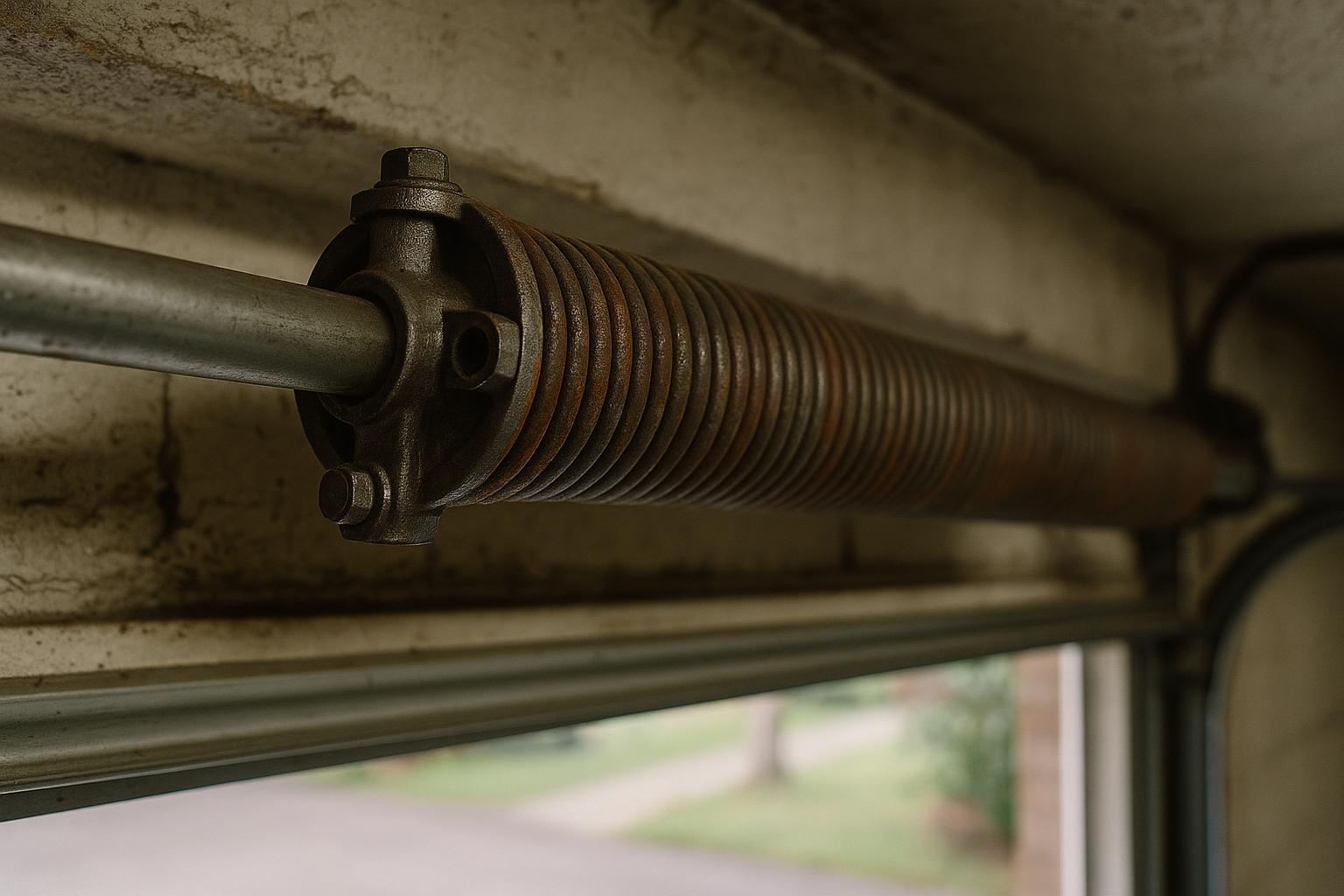
Take a look at the torsion spring mounted above your garage door. A healthy spring has tightly wound coils with consistent spacing. If you see a visible gap or separation between coils, the spring has stretched and is nearing the end of its life. This is one of the most reliable visual indicators of impending failure.
4. The Door Slams Shut
If your garage door closes faster than normal or seems to drop the last foot or two, the springs aren't providing enough resistance to control the descent. This is a safety concern — a door that slams shut can damage the panels, the opener, or worse, injure someone standing underneath.
5. Loud Banging Noise From the Garage
If you've ever heard a sudden, loud bang from your garage — almost like a gunshot — that may have been a spring breaking. Sometimes homeowners in Schenectady and the surrounding areas call us thinking something fell or someone tried to break in. More often than not, it was a torsion spring snapping under tension. If you heard that noise weeks ago and your door has been struggling since, a broken spring is the likely culprit.
6. Rust on the Springs
Rust is a spring's worst enemy. It increases friction between the coils as they wind and unwind, which accelerates wear. It also weakens the structural integrity of the metal itself. If you see rust forming on your springs, it's time to have them inspected by a professional. Regular lubrication with a silicone-based spray can help prevent rust, but once corrosion has set in significantly, replacement is the safer option.
7. Your Opener Is Straining
Your garage door opener is designed to move the door — not lift its full weight. That's the springs' job. If your opener is making grinding noises, running longer than usual, or tripping the motor's thermal overload, it could be compensating for weak springs. Ignoring this can burn out the opener motor entirely, turning a spring replacement into a much more expensive repair.
Why You Should Never Replace Springs Yourself
We understand the DIY instinct. Many homeowners in Glenville, Rotterdam, and Guilderland are handy and comfortable tackling home repairs. But garage door springs are one job that should always be left to a trained technician.
Torsion springs are under extreme tension. A spring that's improperly handled can release that energy violently, causing serious injury. Professional technicians have the specialized tools, training, and experience to replace springs safely. They'll also ensure the new springs are properly sized and calibrated for your specific door, which is critical for balanced operation and longevity.
Should You Replace One Spring or Both?
If your garage door has two torsion springs and only one has broken, we strongly recommend replacing both at the same time. Here's why:
- Both springs were installed at the same time, so the remaining spring has the same amount of wear and is likely close to failure itself
- Replacing both ensures balanced tension across the door
- You save on labor costs by doing both during a single service visit rather than paying for two separate trips
Think of it like replacing tires — you wouldn't put one new tire on the front and leave a worn one on the other side.
What to Do If Your Spring Breaks
If a spring has already broken, here's what you should do:
- Do not try to open the door — manually or with the opener. Operating a door with a broken spring puts dangerous stress on the remaining hardware and can cause further damage.
- Disconnect the opener by pulling the emergency release cord to prevent accidental activation.
- Call a professional for repair. At Precision Garage Door of Schenectady, we offer prompt service across Schenectady, Niskayuna, Scotia, and the surrounding Capital District communities.
A broken spring doesn't have to ruin your day. In most cases, we can have your door back up and running the same day you call.
Keep Your Springs Healthy With Regular Maintenance
The best way to avoid a surprise spring failure is preventive maintenance. A professional tune-up once a year can extend the life of your springs and catch small problems before they become big ones. During a maintenance visit, a technician will:
- Inspect springs for wear, rust, and gaps
- Lubricate the springs and other moving parts
- Test the door's balance
- Check the opener's performance
- Tighten hardware and inspect cables and rollers
If it's been a while since your garage door had a checkup, or if you've noticed any of the warning signs above, give us a call. Precision Garage Door of Schenectady is here to keep your garage door running safely and reliably — before a small issue turns into an emergency.