
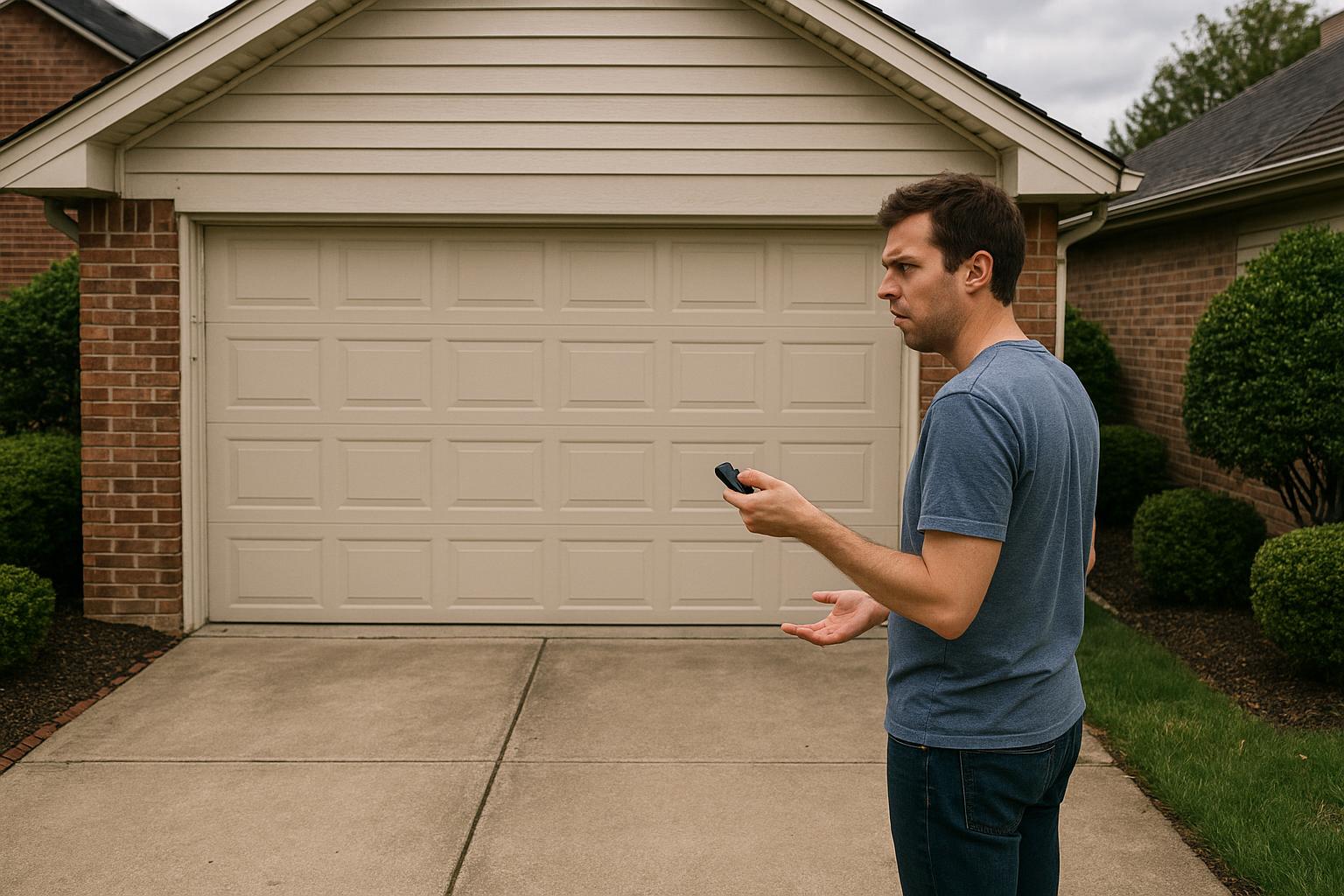
Stuck? Here's How to Troubleshoot a Garage Door That Won't Open
Few things are more frustrating than pressing your garage door opener and getting no response. Whether you're trying to leave for work in the morning or pull into your driveway after a long day, a garage door that refuses to open can throw your entire schedule off track.
Before you panic — or start pulling on things you shouldn't — take a breath. Many of the reasons a garage door won't open are surprisingly common, and some can even be resolved without a service call. In this guide, we'll walk you through the most likely causes and help you figure out the right next step.
1. Check the Obvious First: Power and Batteries
It sounds simple, but you'd be surprised how often the fix is right in your hand. If your garage door opener isn't responding to your remote, start here:
- Replace the batteries in your remote. Weak or dead batteries are the number one reason a remote stops working. Swap them out and try again.
- Check that the opener is plugged in. It's not uncommon for a plug to get bumped loose, especially if you use your garage as a workshop or storage area.
- Look for a tripped breaker or blown fuse. Head to your electrical panel and make sure the circuit that powers your garage hasn't tripped. This happens more often than you'd think during Schenectady's summer storms or winter cold snaps.
If power is restored and the remote still doesn't work, try using the wall-mounted button inside the garage. If the wall button works but the remote doesn't, the issue is likely with the remote itself or the opener's antenna.
2. The Door Is Locked or in Manual Mode
Many garage doors have a manual lock — a horizontal bar that slides into the track on either side. If someone engaged this lock, the opener motor will strain but the door won't budge. Check both sides of the door for a locking mechanism and disengage it.
Similarly, if the emergency release cord has been pulled (the red handle hanging from the opener rail), your door has been disconnected from the automatic opener. This is designed for situations like power outages, but it's easy to forget it's been activated. Reconnect the door to the opener by pulling the release cord toward the opener or manually sliding the trolley back into place until it clicks.
3. Something Is Blocking the Safety Sensors
Modern garage door openers are equipped with photoelectric safety sensors near the bottom of the door tracks. These sensors send an invisible beam across the opening, and if anything breaks that beam — a trash can, a garden hose, a child's toy — the door won't close or open properly.
Here's what to check:
- Clear any obstructions from the area between the two sensors.
- Wipe the sensor lenses with a clean cloth. Dust, cobwebs, and grime can block the beam.
- Check the alignment. Each sensor should have a steady light (usually green). If one is blinking, it's misaligned. Gently adjust it until the light holds steady.
Sensor issues are one of the most common service calls we get from homeowners in Niskayuna and Rotterdam, and they're often a quick fix.
4. Broken Springs: The Most Common Serious Cause
If you hear a loud bang from your garage and the door suddenly won't open, there's a strong chance a torsion or extension spring has snapped. Garage door springs bear the full weight of the door — which can be 150 to 300 pounds or more — and when they break, the opener motor simply can't lift it alone.
Do not attempt to open a garage door with broken springs manually. The door is extremely heavy without spring assistance, and trying to force it can cause serious injury or further damage to the door and opener system. This is a job for a trained technician with the right tools and experience.
5. The Tracks Are Misaligned or Obstructed
Your garage door travels along metal tracks on either side. Over time, these tracks can shift, bend, or accumulate debris. If the door starts to open but gets stuck partway, look along the tracks for:
- Visible gaps between the track and the wall
- Bends or dents in the track
- Buildup of dirt, ice, or small objects in the track channel
Minor debris can sometimes be cleared carefully, but bent or misaligned tracks should be handled by a professional. Forcing a door through a damaged track can cause the door to come off the tracks entirely — a dangerous and expensive problem.
6. The Opener Motor Has Failed
Garage door openers are mechanical devices, and like any machine, they have a lifespan. Most openers last between 10 and 15 years with proper maintenance. If your opener hums but doesn't move the door, or if it makes no sound at all despite having power, the motor or internal gears may have worn out.
Signs that your opener may need replacement include:
- A burning smell coming from the motor unit
- The motor runs but the chain, belt, or screw drive doesn't move
- Intermittent operation that's gotten progressively worse
If your opener is approaching the end of its life, upgrading to a newer model can bring significant benefits — including quieter operation, smartphone connectivity, battery backup, and improved safety features.
7. Weather-Related Issues Specific to Schenectady
Living in the Capital District means dealing with temperature extremes that can directly affect your garage door. In winter, weatherstripping along the bottom of the door can freeze to the garage floor, effectively gluing the door shut. Pouring warm water along the seal or using a heat gun on a low setting can help free it — but be careful not to damage the seal itself.
Humidity and temperature swings can also cause wooden garage doors to swell or warp, making them stick in the frame. If your wooden door is increasingly difficult to operate, it may need to be planed, sealed, or replaced.
When to Call a Professional
Some garage door problems are safe to troubleshoot on your own — dead batteries, sensor obstructions, tripped breakers. But anything involving springs, cables, tracks, or the opener's internal components should be left to a qualified technician. These systems are under extreme tension and can cause serious injury if handled incorrectly.
At Precision Garage Door of Schenectady, we respond quickly to service calls across Schenectady, Glenville, Guilderland, Scotia, and the surrounding communities. We'll diagnose the problem honestly, explain your options clearly, and get your door working again — usually in a single visit.
Don't Let a Stuck Door Ruin Your Day
A garage door that won't open is more than an inconvenience — it can compromise your home's security and leave your vehicle trapped when you need it most. If you've tried the basic troubleshooting steps above and your door still won't budge, don't force it. Give us a call and let our experienced technicians handle it safely and efficiently.